Migration ist eine globale Realität und seit jeher Teil der Menschheitsgeschichte. Dennoch gehört sie bis heute zu den am stärksten umkämpften öffentlichen Themen.
Sowohl Menschen als auch Grenzen sind ständig in Bewegung. Wer sich bewegen darf und wem Rechte zugesprochen werden, zeigt, wer als Teil der Nation angesehen wird. In Deutschland wie in den Vereinigten Staaten sind diese Debatten — und die damit verbundenen politischen und gesellschaftlichen Praktiken — eng mit sich wandelnden Vorstellungen von „Rasse“, Kultur und Sprache verbunden.
Diese Zeitleisten zeigen, wie Rechte und Zugehörigkeit durch Gesetze, migrantische Bewegungen und Kämpfe, globale Ereignisse und kulturelle Werke ausgehandelt, infrage gestellt und neu definiert wurden — und wie diese Geschichten bis heute nachwirken.
Entstanden sind die Zeitleisten in einem community-basierten Prozess gemeinsam mit Partner*innen aus migrantischen Selbstorganisationen, Bildungsinstitutionen und Wissenschaft sowie mit Unterstützung vieler weiterer Beteiligter und Ehrenamtlicher.


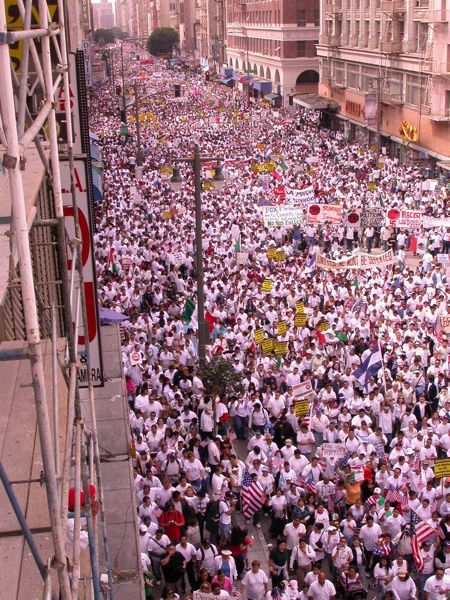
Starting in 2001, U.S. lawmakers debated Comprehensive Immigration Reform (CIR)—a legislative strategy to offer legal pathways, updated visa programs, and increased border enforcement. At the heart of this debate is the fate of over 11 million undocumented immigrants—many of whom have lived in the U.S. for years, contributing to their communities while facing exclusion from legal protections, a constant threat of deportation, and limited access to basic rights and political representation. While supported by wide coalitions spanning civil rights, labor, faith, and business sectors, repeated attempts—including major bills in 2007 and 2013—failed in Congress, largely due to political gridlock and rising anti-immigrant sentiment.
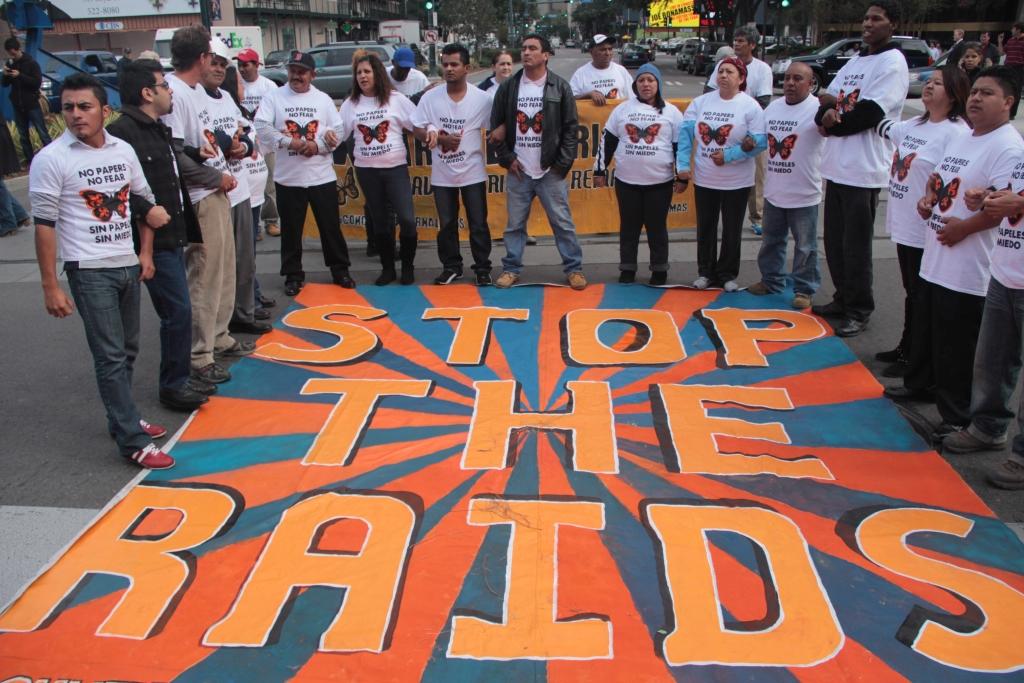 Credit: New Orleans Workers' Center for Racial Justice - Right to Remain