Timelines

Migration is a natural part of living systems, and human history is no exception. Yet it remains one of the most debated public issues of our time.

Both people and borders move. Who is allowed to move, and who is granted rights, lies at the heart of how nations define belonging. In Germany and the United States alike, these debates have been deeply intertwined with evolving ideas of race and ethnicity.

These timelines trace how citizenship and belonging have been constructed, challenged, and redefined through laws, social movements, global events, and cultural works — and how those histories continue to shape the present.

Close
1980
-
1989
Central American Civil Wars & Refugees

The 1980s marked a new era of immigration to the United States, as the U.S. government, under President Carter, expanded its recognition of refugees (see also: Increased Asylum as U.N. Definition of Refugee Adopted, 1980) beyond those fleeing communist regimes.
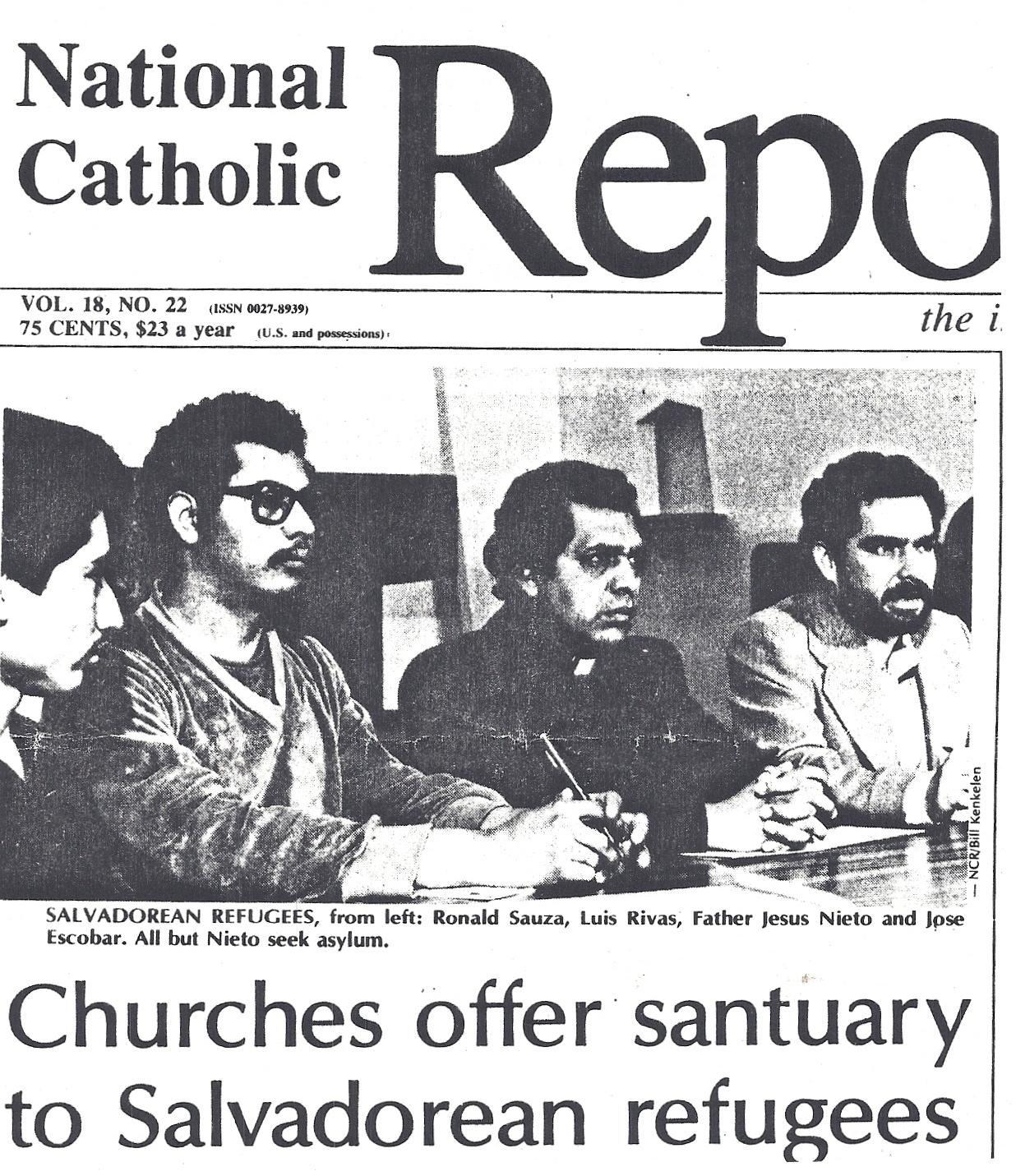
Concurrently, many Central American countries were undergoing widespread social unrest. Large-scale Marxist movements clashed with military and paramilitary forces, many of them supported by the U.S. military. Despite the 1980 Refugee Act, newly elected President Reagan and his administration denied asylum to those fleeing to the U.S. on the grounds that Central American governments were not violating human rights. Despite these efforts, nearly a million Central American migrants entered the United States, many without documentation. A solidarity network, known as the Sanctuary Movement, grew out of growing concerns for the United States’ role in Central America, the blockades placed on asylum seekers, and the large number of human rights violations. This movement worked to create safe spaces and support for refugees fleeing Central America.
Xerox Scan of National Catholic Report on the Press Conference launching the Sanctuary Movement on March 29th, 1982.
The Sanctuary Movement was a religious and political campaign aimed at providing safe havens for refugees fleeing the Central American civil wars and unrest. Many religious denominations were included in the effort of providing food, shelter, and resources to fleeing Central Americans. They also would protest and lead campaigns against governmental actions in regards to deportations and rejecting fleeing refugees.
United States
Sources
  1. Susan Gzesh. Central Americans and Asylum Policy in the Reagan Era. Migration Policy Institute. April 1, 2015. Date accessed: September 12, 2015.
  2. David G. Gutiérrez. An Historic Overview of Latino Immigration and the Demographic Transformation of the United States. National Park Service. Date accessed: September 12, 2015.
  3. Central American Migration. KCET. Date accessed: September 12, 2015.
Learn how these timelines were made
UNITED STATES
/
GERMANY
All Events
Stories: 0
Search icon
Instagram WRInstagram From HereFacebook
Copyright 2026 With Wings and Roots. All rights reserved.
Terms and Conditions