Timelines

Migration is a natural part of living systems, and human history is no exception. Yet it remains one of the most debated public issues of our time.

Both people and borders move. Who is allowed to move, and who is granted rights, lies at the heart of how nations define belonging. In Germany and the United States alike, these debates have been deeply intertwined with evolving ideas of race and ethnicity.

These timelines trace how citizenship and belonging have been constructed, challenged, and redefined through laws, social movements, global events, and cultural works — and how those histories continue to shape the present.

Close
1956
No compensation for Roma and Sinti

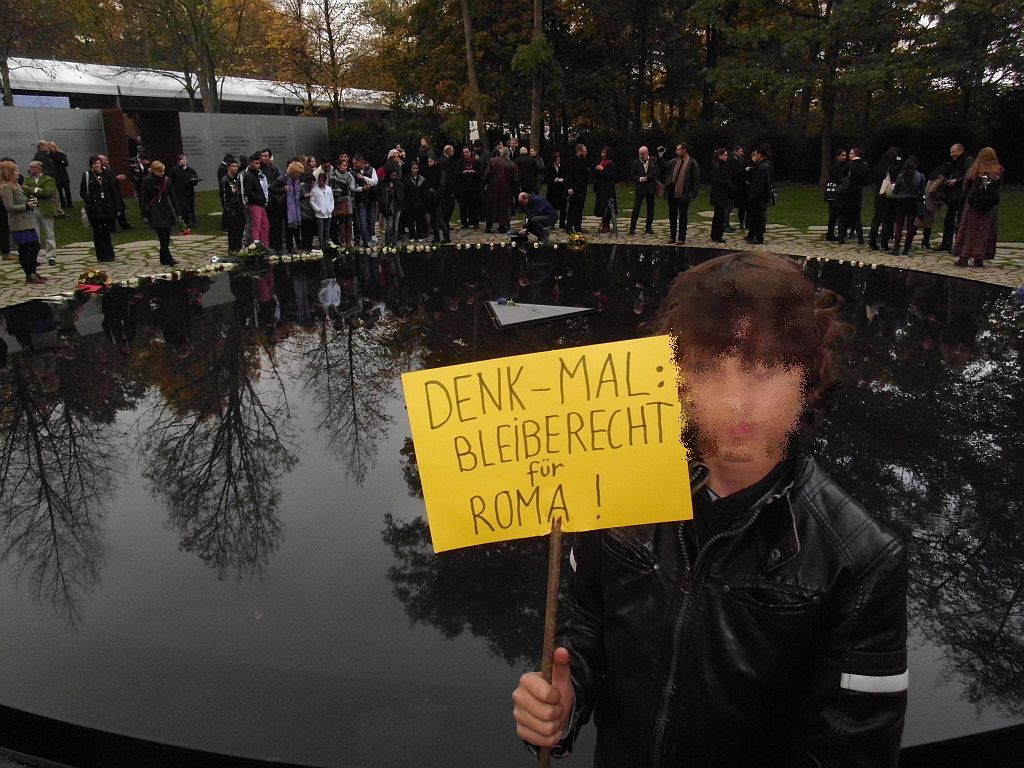
Under the Nazi regime, more than 500,000 Sinti and Roma were murdered, thousands more were being persecuted and deported. In 1956, the Federal Supreme Court (BGH) claimed in a decision in principle that Sinti and Roma would be excluded from the Federal Compensation Law, arguing that their persecution until 1943 wasn’t due to racist or religious reasons but to self-inflicted reasons. Thus, the Court based their decision on racist and criminalizing ascriptions from the Nazi regime. Moreover, the Federal Compensation Law held fast to the so-called subjective and personal territoriality principle, according to which benefits could be claimed only by victims of the Nazis who were residents of the FRG or West Berlin. Many Sinti and Roma did not fulfill this criteria because their residence status had been declared as deprived under the Nazi regime.
Thus, the Court based their decision on racist and criminalizing ascriptions from the Nazi regime.
Germany
Sources
  1. Torben Fischer, Matthias N Loren. Lexikon der „Vergangenheitsbewältigung“ in Deutschland: Debatten- und Diskursgeschichte des Nationalsozialismus nach 1945. Bielefeld. 2007.
  2. Verfolgung und Vernichtung der Roma und Sinti. Frankfurter Roma berichten über die verweigerte Entschädigung. Förderverein Roma. January 26, 2003. Date accessed: September 10, 2015.
  3. Julia von den Knesebeck. The Roma Struggle for Compensation in Post-War Germany. Hatfield: University of Hertfordshire Press, 2011.
Additional Resources
  1. Rose Romani, Weiss Walter. Zwangsarbeit von Roma und Sinti im ‚Dritten Reich’: Verweigerte Entschädigung. Die Zeit. 13/09/1991. Date accessed: September 10, 2015.
  2. Roma Geschichte: Institutionalisierung und Emanzipierung.. Council of Europe – Project Education Of Roma Children In Europe. Date accessed: September 10, 2015.
  3. Merfin Demir. Sinti und Roma am Internationalen Holocaustgedenktag . Migazin. 26/01/2012. Date accessed: September 10, 2015.
Learn how these timelines were made
UNITED STATES
/
GERMANY
All Events
Stories: 0
Search icon
Instagram WRInstagram From HereFacebook
Copyright 2026 With Wings and Roots. All rights reserved.
Terms and Conditions