Timelines

Migration is a natural part of living systems, and human history is no exception. Yet it remains one of the most debated public issues of our time.

Both people and borders move. Who is allowed to move, and who is granted rights, lies at the heart of how nations define belonging. In Germany and the United States alike, these debates have been deeply intertwined with evolving ideas of race and ethnicity.

These timelines trace how citizenship and belonging have been constructed, challenged, and redefined through laws, social movements, global events, and cultural works — and how those histories continue to shape the present.

Close
1887
Native Americans’ Political Autonomy Threatened

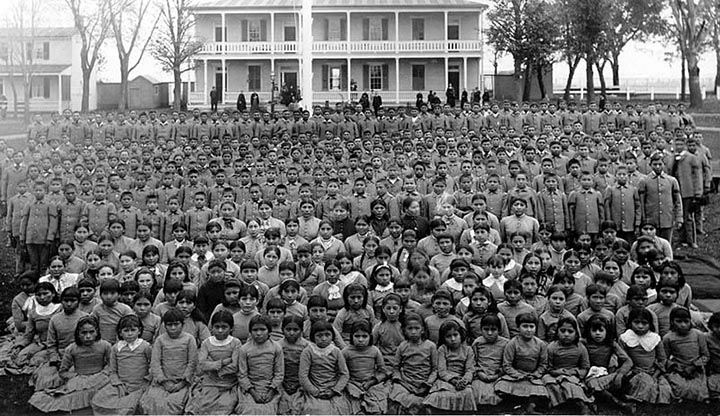
The Dawes Severalty Act of 1887 (also known as the Allotment Act) represented a departure from prior federal Indian policy as it sought to break up Native American lands—and the larger tribal system—rather than promoting the reservation system. The Dawes Act authorized the division of tribal land into individual allotments. Community-owned lands were parceled into 160-acre allotments for each male head of the family. Those who accepted the land, thereby agreeing to live separately from the tribe, were granted U.S. citizenship. Many First Nations resisted the Allotment Act, viewing it as a devastating colonial assault on their political autonomy and cultural identities. By 1933, Native Americans had lost nearly two-thirds of their 138 million-acre land base. The federal government continued to amend the act and eventually reversed policy in the 1930s with the Indian Reorganization Act, which promoted Native self-government, cultural retention, and reservation life.
a devastating colonial assault on Native Americans' political autonomy
Library of Congress
An archived poster from 1911 advertises the sale of Native land by the U.S. government.
United States
Sources
  1. Cleveland Signs the Dawes Severalty Act. History.com. A+E Networks, 2009. Date accessed: August 31, 2015.
  2. The Full Text of the Dawes Act. Date accessed: November 30, 2014.
Additional Resources
  1. “Ghost Dance The West, a Film by Stephen Ives”. New York, NY: Films Media Group, 2011.
  2. Lesson Plan: The Nez Perce and the Dawes Act. Date accessed: March 17, 2015.
  3. Dee Brown. Bury My Heart at Wounded Knee: An Indian History of the American West. New York: Holt, Rinehart & Winston.
  4. Emily Greenwald. Reconfiguring the reservation: the Nez Perces, Jicarilla Apaches, and the Dawes Act. Albuquerque: University of New Mexico Press.
  5. D.S. Otis, Francis Paul Prucha. The Dawes Act and the allotment of Indian lands. Norman: University of Oklahoma Press.
  6. Wilcomb E. Washburn. The assault on Indian tribalism: the General allotment law (Dawes act) of 1887. Philadelphia: Lippincott.
Learn how these timelines were made
UNITED STATES
/
GERMANY
All Events
Stories: 0
Search icon
Instagram WRInstagram From HereFacebook
Copyright 2026 With Wings and Roots. All rights reserved.
Terms and Conditions