Timelines

Migration is a natural part of living systems, and human history is no exception. Yet it remains one of the most debated public issues of our time.

Both people and borders move. Who is allowed to move, and who is granted rights, lies at the heart of how nations define belonging. In Germany and the United States alike, these debates have been deeply intertwined with evolving ideas of race and ethnicity.

These timelines trace how citizenship and belonging have been constructed, challenged, and redefined through laws, social movements, global events, and cultural works — and how those histories continue to shape the present.

Close
1880
Labor Migration in the German Empire

At the end of the 19th century, the German Empire develops from a stand-based agrarian economy into a capitalist industrial state. This leads to a migration from rural areas to the cities, as well as to labor migration from bordering countries.

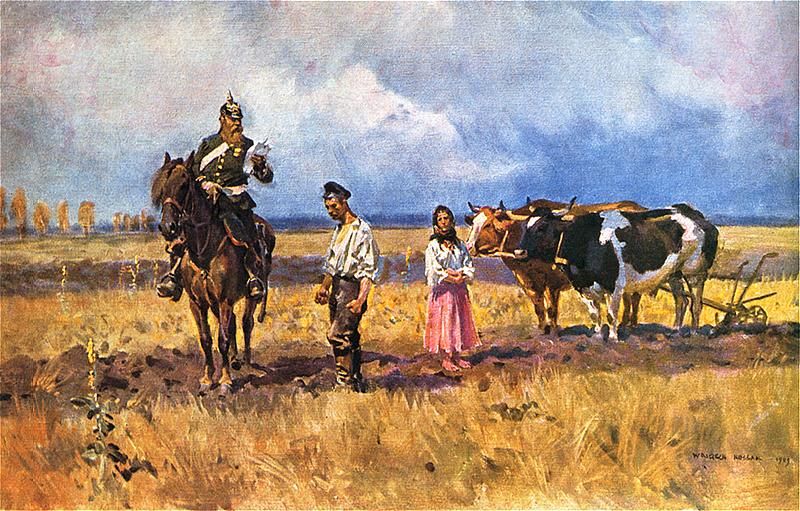
The center and South-West of Germany, Berlin and the Ruhr area develop into growing centers of the industrial production at the end of the 19th century. The prospect of higher wages and social advancement opportunities enable a migration of a large number of farm laborers east of the river Elbe (Prussia east of the Elbe and Mecklenburg-Schwerin) to the west. These migrant workers were called “Sachsengänger“ (“migrants of Saxony“) and “Ruhrpolen“ (“Polish of the Ruhr“) by their contemporaries. The first are seasonal workers, which work in the agriculture in Saxony and in the west provinces of Prussia. The latter look for employment in the industrial areas and mining industry in West Germany as workers and miners. They speak Polish but have the German nationality (the so-called “national Polish“) (see also: Founding of the German Empire, 1871). Together with the transnational emigration, this East-West-Migration leads to a massive lack of work force, the so-called “shortage of people“(See also: Migration in the USA, 1880). As a reaction to this, the landowners east of the Elbe recruit seasonal workers from the territories in Poland, which are occupied by Russia and Austria-Hungary (the so-called “foreign Polish“). Primarily, they worked in the root crop agriculture with beets and potatoes. Almost half of them are women. These workers are mostly unskilled, have long working hours and receive significantly lower wages as the German workers. The labor migration in the Prussian Eastern provinces was not controlled by the state. The resistance of nationalist circles, nevertheless, led to a growing regulation by the Wilhelmine government from 1890 on. The “National Polish“ as well as the “foreign Polish“ are exposed to massive oppression by the state and an increasing discrimination (see also: Germanisation policy in the German Empire, 1885).
The labor migration in the Prussian Eastern provinces was not controlled by the state. The resistance of nationalist circles, nevertheless, led to a growing regulation by the Wilhelmine government from 1890 on.
Germany
Learn how these timelines were made
UNITED STATES
/
GERMANY
All Events
Stories: 0
Search icon
Instagram WRInstagram From HereFacebook
Copyright 2026 With Wings and Roots. All rights reserved.
Terms and Conditions