Attack in Halle
On October 9, 2019, the holiest Jewish holiday, Yom Kippur (Day of Atonement), Stephan B. carried out an attack on the synagogue in the Paulusviertel district of Halle. Around 50 people were gathered in the synagogue, many of whom were visiting from the US. During the attack, the cantor saw the armed perpetrator on the surveillance camera, reacted quickly, and called on everyone present to barricade themselves on the upper floor. Despite the extreme situation, the mood is described in retrospect as calm and level-headed. Prayers continued until the police arrived. After failing to shoot through the door, the perpetrator shoots Jana Lange in front of the building and, after driving a short distance to the “Kiez-Döner” snack bar, shoots a guest, Kevin Schwarze. Abdi Raxmaan Aftax Ibrahim is hit by his car but survives. Dagmar Mönkemeyer and Jens Zinecker are injured while fleeing.
The perpetrator planned the crime well in advance and joins other perpetrators who express their right-wing extremist, anti-Semitic, and racist worldview on the internet in the form of videos or self-written manifestos. In addition, the perpetrator is influenced by the anti-feminist incel movement and broadcasts the crime in the style of gamification as a real-life shooter game with a helmet camera livestream.
From mid to late 2020, the trial takes place at the Magdeburg Regional Court and ends with a life sentence followed by preventive detention. The police's conduct is described as slow and unprofessional. The Federal Ministry of Justice pays compensation to those affected, but does not provide financial assistance for economic losses following attacks. In September 2020, victim assistance is reformed so that businesses can apply for financial aid.
Hanau attack
On February 19, 2020, nine people were killed in an attack in Hanau within just under six minutes in front of and inside a hookah bar, a kiosk, and another bar: Gökhan Gültekin (37), Sedat Gürbüz (29), Said Nesar Hashemi (21), Mercedes Kierpacz (35), Hamza Kurtović (22), Vili Viorel Păun (22), Fatih Saraçoğlu (34), Ferhat Unvar (24), Kaloyan Velkov (33). Six other people were injured, some seriously. The perpetrator, Tobias R. (43), initially fled to his parents' house, where he first shot his mother, Gabriele R. (72), and then himself. His motive can be traced back to a mixture of psychotic delusions and a clear commitment to a right-wing extremist, racist, anti-Semitic, and anti-feminist worldview. Similar to the perpetrator in Halle, he planned the attack thoroughly and communicated his thoughts in a manifesto that he posted on his website. The perpetrator's father, who holds similar views, was charged with aiding and abetting murder, but the criminal complaint has been dropped.
After the crime, many questions remain unanswered. Among other things, how was the perpetrator able to obtain a weapon despite having been officially diagnosed with psychosis? Why was the police unable to arrive on the scene in time and secure the perpetrator's home? How was it possible that 13 of the 19 members of the SEK who were on duty in Hanau that night from Frankfurt am Main were involved in right-wing extremist chat groups? And finally, why was the emergency exit of a bar locked, which could have enabled escape from the perpetrator and which the police were aware of?
An official memorial service will be held on February 20, preceded by a rally and silent march organized by the families and friends of those murdered. Many speak openly about their fear. Every such act reminds people who have experienced racism that they are not safe in Germany. Because although the state expresses sympathy and makes promises, these are not implemented, relatives join forces and found the “Initiative 19 February Hanau.” Furthermore, #saytheirnames is spreading, following on from the Black Lives Matter movement, so that the names of those killed are not forgotten.
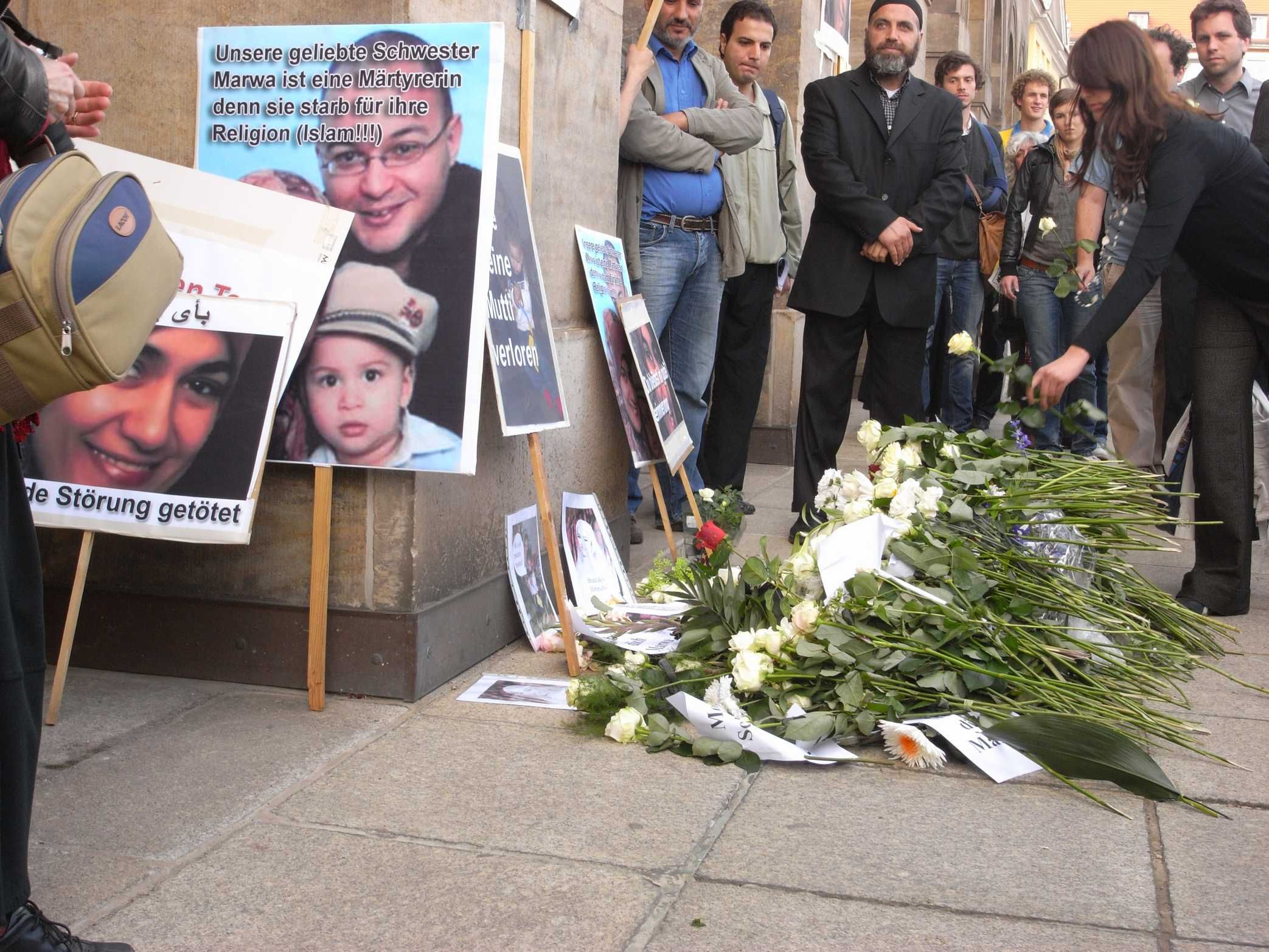
Although these cases are the most recent, they are by no means the only racist and right-wing extremist murders (see NSU murders, 2011; see murder of Marwa El-Sherbini, 2009; see murder of Amadeu Antonio Kiowa, 1990). On July 22, 2016, David S. killed nine people and injured five at and in Munich's Olympia Shopping Center (OEZ). The 18-year-old then shot himself. In his writings, he cites the right-wing extremist Anders Breivik as his role model. In 2019, Kassel District President Walter Lübcke, who showed solidarity with refugees, was shot dead in the garden of his home. The Federal Criminal Police Office, which only began counting right-wing extremist killings in 1990, has recorded 109 murders to date. Foundations and organizations such as Amadeu Antonio and ezra criticize the counting method and assume that there have been more than 200, stating that killings of homeless people and killings caused by police action are often not included in the count.